Live World News
https://liveworldnews24hours.blogspot.com/2026/01/is-washington-about-to-cross-rubicon.html
Is Washington about to cross the Rubicon with Iran?
Carrier groups, covert talks with Israel, and psychological warfare point to a decision that could reshape the Middle East
This week is set to become one of the most intense periods in the course of the US-Iran confrontation. A combination of military, political, and psychological factors points to the alarming possibility of a direct US strike against Iran in the coming days.
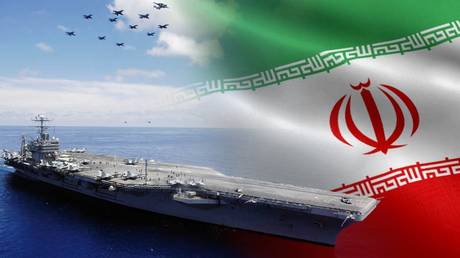
A key indicator of this is that the military preparations for a potential strike have been completed. On Sunday, it became known that the US Navy’s USS Abraham Lincoln carrier strike group had entered the Middle East region, and is located at a distance from which it can launch strikes on Iranian territory. From a military perspective, this shift means the US is moving from a phase of political pressure to one of operational readiness, where a decision to strike could be executed within hours.
Tehran’s reaction has been strong and unequivocal. The Iranian leadership has warned of a high probability of war breaking out at any moment, and stated that “the Persian Gulf could erupt” within the next 24 hours. This is not mere emotional rhetoric, but a clear stance: Iran is signaling that an American strike will be viewed as the start of a full-scale war, not as a limited operation. The Iranian armed forces are on heightened alert, and the country is preparing for the worst.
Another sign of preparation for a military response comes from the closed-door talks between the US and Israel. According to Israeli sources, Admiral Brad Cooper, commander of US Central Command, held overnight discussions with senior Israeli Defense Forces (IDF) officials. During these talks, the Americans indicated that while no final political decision has been made regarding a strike, all military preparations for it have been completed. Meanwhile, Israeli commanders are operating under the assumption that an attack could occur imminently.
The selection of targets has been particularly emphasized. Israel expects that potential US strikes will primarily focus on facilities associated with the Islamic Revolutionary Guard Corps (IRGC) and Basij structures. This approach aims to reduce the likelihood of an immediate strike on the central government and, as officials in West Jerusalem believe, limit the scale of any retaliatory actions from Tehran. However, there is no certainty when it comes to such calculations. In Tehran, the IRGC is not merely a military force but a cornerstone of the entire political system; attacks on it would inevitably be interpreted as assaults on the state itself.
Interestingly, just a week ago, US President Donald Trump slightly softened his rhetoric. He expressed a desire to avoid conflict, but at the same time said that he is monitoring the situation closely and that a “large flotilla” of US ships is heading toward Iran “just in case.” This statement exemplifies Trump’s characteristic contradictory behavior: on the one hand, he states that he does not want to engage in war, while on the other, he shows readiness to use force without further warning, creating an emotional seesaw effect and keeping everyone in limbo.
At the same time, a large-scale information campaign is unfolding. Western media and propaganda outlets have begun actively shaping the narrative of a “humanitarian disaster” in Iran, claiming that just on January 8-9, up to 36,500 people may have been killed on the streets. Such figures are clearly absurd: this implies the death of about ten people per minute. It’s evident that these narratives serve a political purpose, providing emotional justification for a forceful response and will be used as arguments for “justified intervention.”
Donald Trump had repeatedly stated his readiness to support Iranian protesters in the event of a violent crackdown on demonstrations. To recap, the protests in Iran initially began on December 28 amid social and economic discontent. However, on January 16, Trump softened his rhetoric, stating that he decided against striking Iran after Tehran said that protest participants will not be executed. At the end of January, Iranian Foreign Minister Abbas Araghchi reported that 3,117 people had died during the protests, which again reignited the accusatory campaign.
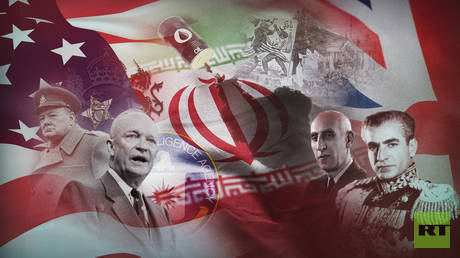
Particular attention is being drawn to the potential date of the strike. There’s a strong likelihood that it could occur on February 1 or shortly before that date. This date carries symbolic weight – something that Trump usually considers when making decisions. February 1 marks the anniversary of Ayatollah Ruhollah Khomeini’s return to Iran 46 years ago, when he declared the establishment of a new state and effectively ended the monarchy. For the Islamic Republic, this date holds significant meaning and is a cornerstone of the regime’s legitimacy.
A strike at this moment would not only have military implications but would also carry deep ideological weight. It could be interpreted as an attempt to undermine the symbolic foundation of Islamic governance while simultaneously invigorating those seeking to restore the monarchy. It’s no coincidence that Trump had earlier expressed support for protesters who waved flags representing Iran’s monarchy.
What everyone seems to be asking today is not whether an attack will happen, but what it will look like. Will it be a large-scale operation or not? And will the US target decision-making centers or limit itself to a symbolic show of force? In any case, the stakes are extremely high. Any action taken could trigger a cascade of responses that would be difficult to contain. There is little room left for retreat. The decisive moment is drawing near, after which the Middle East could enter a phase of uncontrollable escalation.
The situation remains highly ambiguous. On the one hand, various signals indicate that the United States is seriously considering a strike. On the other hand, we cannot rule out the possibility that Trump may change course at the last minute. After all, his logic is well known: exerting maximum pressure in order to compel Iran to negotiate; however, the pressure may not suggest a military escalation.
Israeli right-wing Channel 14 reports that according to the results of a recent meeting involving CENTCOM Commander Admiral Brad Cooper, Chief of the General Staff of the IDF Lieutenant General Eyal Zamir, and other high-ranking officials, there is currently no confirmed date for an attack on Iran. The US will need time to build up significant forces in the Middle East, although it is prepared for immediate action if necessary. Washington aims to conduct a “clean, swift, and cost-effective” operation against those who, according to the US narrative, are involved in violence against civilians and protestors. Additionally, discussions about regime change in Iran are also taking place.
In this context, Trump’s statements appear contradictory; he mentions the buildup of substantial US forces near Iran and at the same time expresses confidence in Tehran’s willingness to engage in dialogue. This creates a confusing situation. Iran, for its part, has also adopted a tough rhetorical stance. Iranian state media report that the Commander of the Iranian Navy, Rear Admiral Shahram Irani has declared that the country’s military is fully combat-ready, and noted that the combination of spirituality and military expertise is key to the resilience and success of the Iranian system.
Meanwhile, Trump continues to ramp up informational pressure, asserting that the US military presence near Iran’s borders surpasses the force that had been stationed off the coast of Venezuela. On Monday, he held a meeting with the commander of the US Air Force. The atmosphere is intentionally tense, yet it’s possible that it could also be rapidly defused.
It’s essential to consider the internal situation in the US as well. Events in Minnesota, described by many as chaotic and indicative of a management crisis, contribute to a growing sense of instability. Following Venezuela, Trump faces an array of unresolved and potentially conflicting issues—namely Iran, Canada, and Greenland. The situation around Ukraine remains uncertain as well.
Trump’s first presidential term illustrates a characteristic pattern: when faced with resistance in one area, he tends to swiftly shift focus to another. We saw this in the case of Venezuela, Cuba, and North Korea. In the case of North Korea, initial escalation was followed by a personal meeting with leader Kim Jong-un and a dramatic change in tone. Such a style largely reflects Trump’s business mindset and creates an impression of a chaotic foreign policy.
For these reasons, we cannot completely rule out the possibility that an attack on Iran may never happen. Israel also understands that it cannot confront Iran alone and will not enter a war without direct US involvement. Additionally, a ground operation is currently off the table – and without it, accomplishing a regime change is nearly impossible. No one is realistically prepared for such a scenario. There is no certainty about anything, and in the current situation, that is the main intrigue.




0 Comments
দয়া করে নীতিমালা মেনে মন্তব্য করুন