Live World News
https://liveworldnews24hours.blogspot.com/2026/03/what-china-stands-to-lose-and-gain-from.html
What China stands to lose – and gain – from the Iran war
The US-Israeli strikes on Iran test China’s energy security, diplomacy, and global ambitions all at once
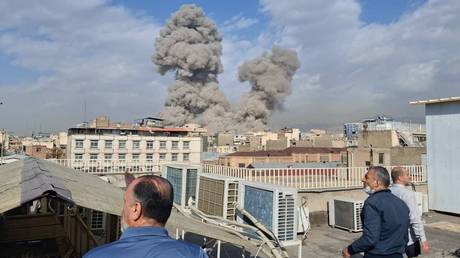
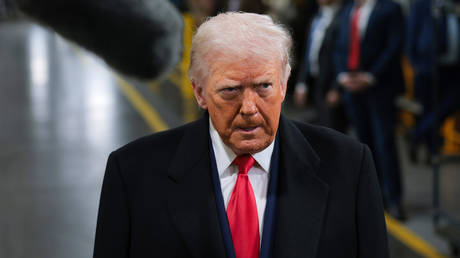
When Washington consented to military operations against Iran, the move reverberated far beyond the Middle East. The escalation is not merely a regional gambit but a part of a broader strategic choreography. The timing – ahead of a new round of high-stakes talks between US President Donald Trump and his Chinese counterpart, Xi Jinping, in Beijing – suggests an attempt to negotiate from a position of maximum leverage. In this reading, the US seeks to demonstrate coercive capacity in multiple theaters, from Panama to Venezuela to Iran, thereby signaling resolve and constraining China’s room for maneuver.
Yet this strategy carries profound risks. A prolonged confrontation with Iran could entangle the US in another open-ended conflict, draining political capital, military readiness, and fiscal resources. Chinese experts have described the operation as a high-stakes gamble that may spiral beyond Washington’s control. Should the conflict metastasize, it could paradoxically strengthen China’s standing as a comparatively restrained and stability-oriented great power – particularly across the Global South, where skepticism toward Western military interventions runs deep.
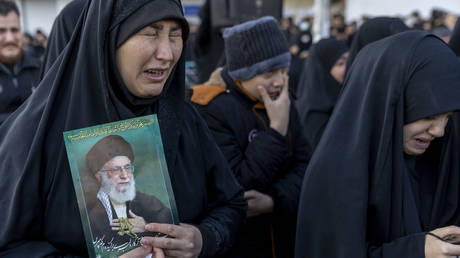
Beijing’s official rhetoric reflects this positioning. China’s Ministry of Foreign Affairs called for “an immediate stop to the military actions, no further escalation of the tense situation, resumption of dialogue and negotiation, and efforts to uphold peace and stability in the Middle East.” After reports of the killing of Iran’s supreme leader, Ali Khamenei, Beijing sharpened its tone, condemning the act as a “grave violation of Iran’s sovereignty and security.” Foreign Minister Wang Yi declared it unacceptable to openly kill the leader of a sovereign state.
The language is calibrated to emphasize three principles: Immediate cessation of hostilities, a return to diplomacy, and opposition to unilateral military action without authorization from the United Nations Security Council. State media commentary has framed the crisis within a longer arc of American military adventurism, from Iraq to Libya and Syria, arguing that interventions justified in the name of stability have repeatedly yielded prolonged disorder. “Resorting to force at the very moment diplomacy shows promise sends a dangerous message,” Xinhua’s authoritative commentary warned, underscoring Beijing’s claim to defend international law and the non-interference norm enshrined in the UN Charter.
Behind these normative statements lies a matrix of hard interests – foremost among them energy security. The most dangerous variable for Beijing is the Strait of Hormuz, the maritime chokepoint through which a substantial share of the world’s oil flows. Roughly 44% of China’s crude imports originate from the broader Middle East. Any disruption in Hormuz would ripple directly into the Chinese economy, threatening industrial output, transportation networks and domestic price stability.
Iran occupies a particularly sensitive position in this equation. China purchases more than 80% of Iran’s oil exports. Official customs data understate the scale of this trade because sanctions have produced elaborate rebranding practices. For Beijing, Iran and Venezuela remain crucial, if discreet, contributors to its energy mix.
Energy, however, is only one dimension of the relationship. In 2021, China and Iran signed a 25-year comprehensive cooperation framework covering energy, infrastructure, telecommunications, and transport corridors linked to the Belt and Road Initiative. Iran’s geography – bridging Central Asia, the Persian Gulf and the eastern Mediterranean – makes it a pivotal node in China’s westward connectivity strategy. Rail links and port investments promise to integrate Iran into transcontinental supply chains that reduce reliance on maritime routes vulnerable to US naval dominance.
Joint achievements, though often less visible than headline-grabbing megaprojects, are tangible. Chinese companies have been involved in upgrading segments of Iran’s railway network, contributing to freight corridors that connect inland industrial hubs to Gulf ports. Energy cooperation has included long-term supply agreements and investment in upstream fields. Telecommunications partnerships have expanded digital infrastructure. Politically, Beijing has sought to reduce Iran’s isolation by supporting its accession to multilateral groupings such as BRICS and the Shanghai Cooperation Organization, embedding Tehran in institutions that dilute Western centrality.
Yet China’s support has clear limits. During the 12-day war in 2025, Beijing criticized US and Israeli strikes but refrained from providing material assistance. This restraint has raised questions about China’s reliability as a strategic partner. Tehran may value diplomatic cover and economic engagement, but in moments of acute crisis, it faces the reality that Beijing will not jeopardize its broader global interests for Iran’s sake.
Indeed, China does not want a nuclear-armed Iran. A weaponized Iranian program could trigger a regional conflagration. It could also spur a cascade of proliferation across the Middle East and even into regions closer to China’s borders. From Beijing’s perspective, nuclearization multiplies uncertainty and undermines the stable external environment required for economic development.
This ambivalence shapes China’s reaction to the current crisis. A total collapse of the Iranian regime, especially if replaced by a Western-aligned government, would represent a strategic setback. It would weaken China’s access to discounted energy supplies and potentially reorient a key Belt and Road partner. At the same time, a weakened but surviving Iran may become more economically dependent on China, deepening asymmetric ties. Sanctions and isolation funnel Tehran toward Beijing, enhancing Chinese leverage in pricing, investment terms, and political alignment.
The crisis also intersects with China’s systemic competition with the US. A contained escalation that raises the strategic and financial costs of America’s posture in the Gulf could serve Beijing’s interests. If Washington is absorbed in Middle Eastern contingencies – deploying naval assets, managing alliance politics, and financing extended operations – it may find fewer resources available for Indo-Pacific initiatives aimed at constraining China. This does not mean Beijing seeks war. Rather, it calculates that US overextension incrementally erodes American hegemony.
This logic aligns with a broader Chinese objective: Undermining, rather than replacing, US primacy. Beijing does not aspire to replicate Washington’s global military footprint. Instead, it advances an alternative narrative centered on sovereignty, non-interference, and development. By condemning unilateral strikes and emphasizing diplomacy, China positions itself as a responsible stakeholder – even as it might quietly benefit from the strategic distractions of its principal rival.
Still, Beijing’s room for maneuver is constrained by structural vulnerabilities. The Strait of Hormuz remains a chokepoint beyond China’s direct control. Unlike the US, China lacks a dense network of regional alliances and forward-deployed forces in the Gulf. Its naval presence, though expanding, is limited compared to the US Fifth Fleet. Consequently, China must rely on diplomacy and multilateralism to safeguard its interests, reinforcing its emphasis on de-escalation.
There is also reputational risk. If China is perceived as exploiting instability for geopolitical gain, its claim to principled neutrality could erode. Conversely, if it is seen as an unreliable partner unwilling to shoulder costs, states may hedge their engagement. The delicate balance – supporting Iran politically and economically while avoiding entanglement in its military confrontations – will test Beijing’s diplomatic agility.
Ultimately, China’s reaction to the Iran crisis reflects a layered calculus. At the tactical level, it seeks immediate de-escalation to protect energy flows and regional stability. At the strategic level, it observes how American coercive behavior reverberates in global opinion and resource allocation. The double-edged nature of Washington’s approach – projecting strength while risking overreach – creates both hazards and openings for Beijing.
If the conflict spirals, the economic shockwaves could undercut China’s growth and complicate its development agenda. The stakes, therefore, extend well beyond Tehran. They reach into the core of China’s grand strategy: Securing the material foundations of its rise while reshaping the architecture of international order. In that sense, the Iran war is not a distant theater for Beijing. It is a stress test of China’s emergence as a global power navigating a turbulent and contested world.



0 Comments
দয়া করে নীতিমালা মেনে মন্তব্য করুন