Live World News
https://liveworldnews24hours.blogspot.com/2026/06/if-only-there-was-german-word-for.html
If only there was a German word for Berlin’s UN humiliation
The UN assembly has turned its back on Germany, for the first time in the country’s modern history
German Foreign Minister Johann Wadephul has blamed Berlin’s failure to secure a seat at the UN Security Council on his country’s superior moral positions. If only there were a German word for that…
Germany failed to win a temporary seat on the UN Security Council for the first time in history on Wednesday, losing out to Portugal and Austria in the ‘Western Europe and Others’ group. Germany easily won all six contests that it entered since 1977, usually with the support of its European and NATO allies.
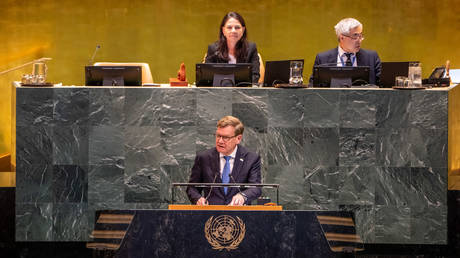
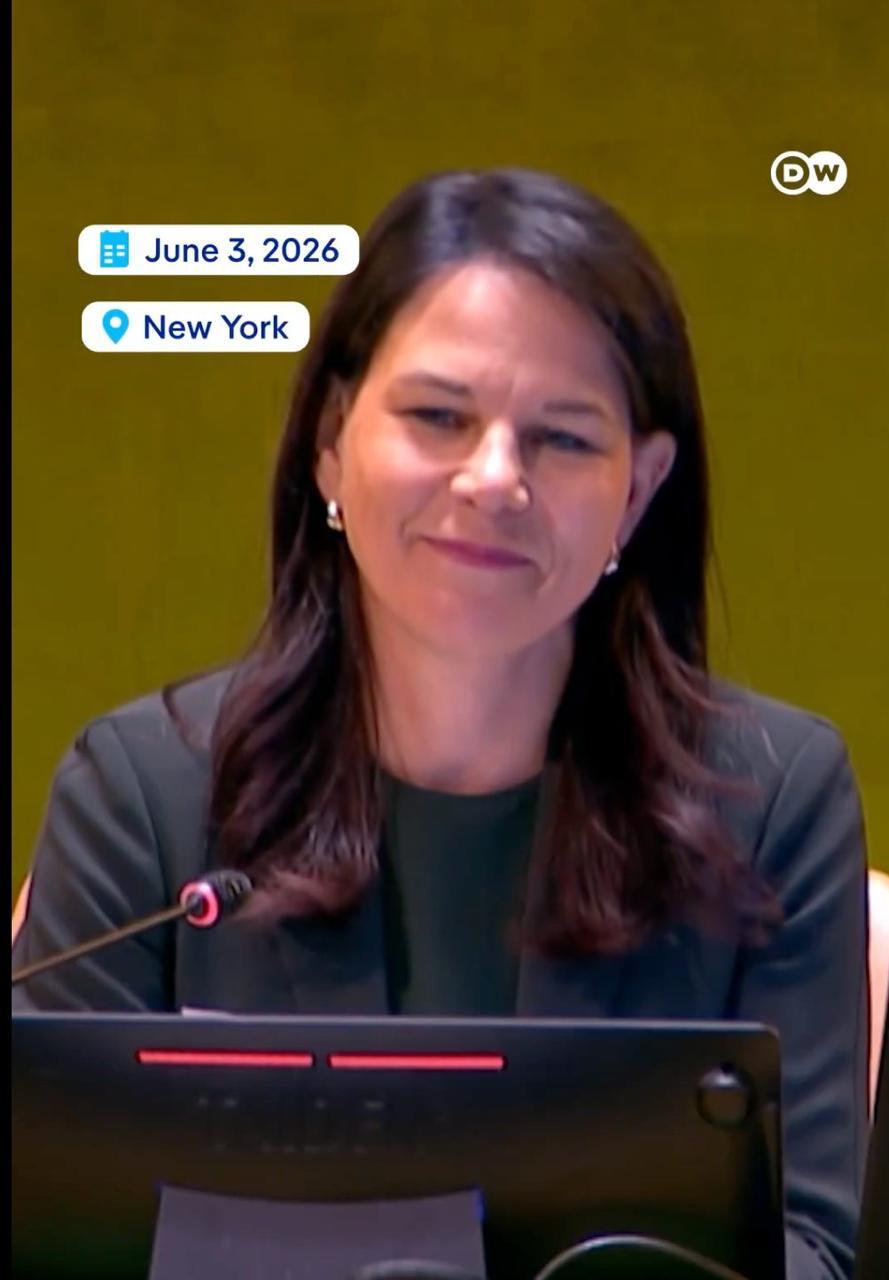
Having won every round it has entered since the mid-twentieth century, this time around, Germany could only manage to secure 104 votes, while Portugal won 134 and Austria – a non-NATO member – took 131. Despite Berlin’s long-held insistence that it deserves a permanent seat on the UNSC, German Foreign Minister Johann Wadephul was forced to listen as the results were read out by none other than Annalena Baerbock.
Schadenfreude: the feeling of joy in an opponent’s misfortune
As president of the UN assembly, the notoriously gaffe-prone former German foreign minister Baerbock’s smile cracked into a grimace as she read the result of the secret ballot.
While the room roundly applauded Austria, Portugal, and the other successful countries, the pushback began. Free Democratic Party MEP Marie-Agnes Strack-Zimmermann described the result as a repudiation of Baerbock’s nagging “politics of the raised index finger,” while human rights lawyer Craig Mokhiber gloated over how neither Baerbock nor Wadephul could could “save Germany from this well-deserved humiliation.”
In a rare moment of justice at the UN General Assembly today, Germany lost its bid for a UN Security Council seat. Germany’s scandalous support for genocide in Palestine and aggression against Iran, and its repression of human rights defenders inside Germany, were all on display…
“[German Chancellor Friedrich] Merz wanted to bring our country ‘back onto the international stage’ at the start of his chancellorship, but now Germany is left without a seat on the UN Security Council,” Alternative for Germany (AfD) leader Alice Weidel wrote on X, adding that Merz has led Germany from “one embarrassment to the next.”
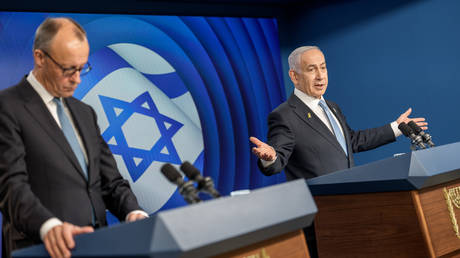
The governments of Christian Democrat Friedrich Merz and Social Democrat Olaf Scholz (the latter of whom Baerbock served under) shared identical foreign policies. Both professed slavish devotion to the American-led “rules-based international order” when it came to Ukraine, and a moral relativism when it came to Israel’s wars in the Middle East.
Baerbock declared the EU to be “fighting a war against Russia” in 2023, called Xi Jinping a “dictator,” and scolded the Chinese president for “taking the side of the aggressor” by refusing to join the West’s proxy war in Ukraine. The following year, she referred to Israeli strikes on Palestinian schools as “self-defense,” and argued that civilian sites lose their protection when “ terrorists” operate in their vicinity.
“When it comes to Russia, international law counts, but when it comes to the USA and Israel, it doesn’t,” left-wing politician Sahra Wagenknecht told the Berliner Zeitung. “This double standard was voted out by the international community yesterday.”
The German dictionary has another take to offer.
Schuldverschiebung: blame shifting
Having overseen Germany’s lowest diplomatic moment in 70 years, Wadephul told reporters that he “did not personally blame himself” for the loss. Russia, he insisted, saw Germany’s “rock-solid support for Ukraine” and “campaigned against us.” He rejected any idea of a double standard on Israel, claiming that “Germany must always assume a special responsibility for Israel with regard to the Middle East conflict.”
Germany’s Foreign Minister Johann Wadephul on why Germany lost UN seat:
There's our rock-solid support for Ukraine. It is no secret that Russia does not want such a voice at the table — and campaigned against us.
There is no evidence that Russia orchestrated a backroom campaign against Germany’s candidacy. Instead, analysts in Germany and abroad have pointed to Berlin’s support for Israel as the key factor behind its loss. “Let’s be clear: Germany’s support for Ukraine had nothing to do with it. Portugal and Austria – who beat Germany – are no less supportive of Ukraine,” Trita Parsi, of the Quincy Institute for Responsible Statecraft wrote on X. “It has everything to do with Germany’s support for Israel’s genocide and the manner in which the German government has been willing to undermine international law and the UN Charter on behalf of Israel.”
Germany, Wadephul argued, essentially fell victim to its own superior moral obligations, which require the country to take seemingly contradictory – but ultimately correct – positions on world affairs.
There does not seem to be a compound German word for this mindset, so we plugged the above sentence into a generator and marveled at the Teutonic masterpiece it spat out:
Moralüberlegenheitsopfermentalität: ‘victim mentality based on moral superiority’
Moralüberlegenheitsopfermentalität is the impulse that drives the foreign policy of Baerbock and Wadephul, and the domestic policies that have dragged Europe’s former economic powerhouse into recession and de-industrialization.
Germany’s iron-clad support for Israel may have alienated many at the UN, but according to Wadephul, the sacrifice was worth it because Germany lived up to “our historical responsibility” to atone for the Holocaust. And, while Germany’s ongoing rearmament and aid to Ukraine may be pushing the country’s budget deficit far above the 3% limit set in place by the EU, the economic pain is worth it to, in the words of Merz, “protect our free democratic order.”
At home, Germany’s decision to cut itself off from Russian energy was economically ruinous, but justified by the country’s leaders as morally correct. Chancellor Angela Merkel’s decision to throw open Germany’s borders to a million Middle-Eastern migrants in 2015 may have facilitated a rise in crime, social unrest, and unemployment, but Germany was declared a “moral superpower” by liberal journalists and Merkel was crowned Time Magazine’s Person of the Year.
Endpunkt
Germany may attempt to deflect blame and portray its contradictory positions as moral duties, but to the rest of the world, its preaching smacks of hypocrisy. The UN vote was a repudiation of Berlin’s double standards, but also an acknowledgement of its declining influence on the global stage.



0 Comments
দয়া করে নীতিমালা মেনে মন্তব্য করুন